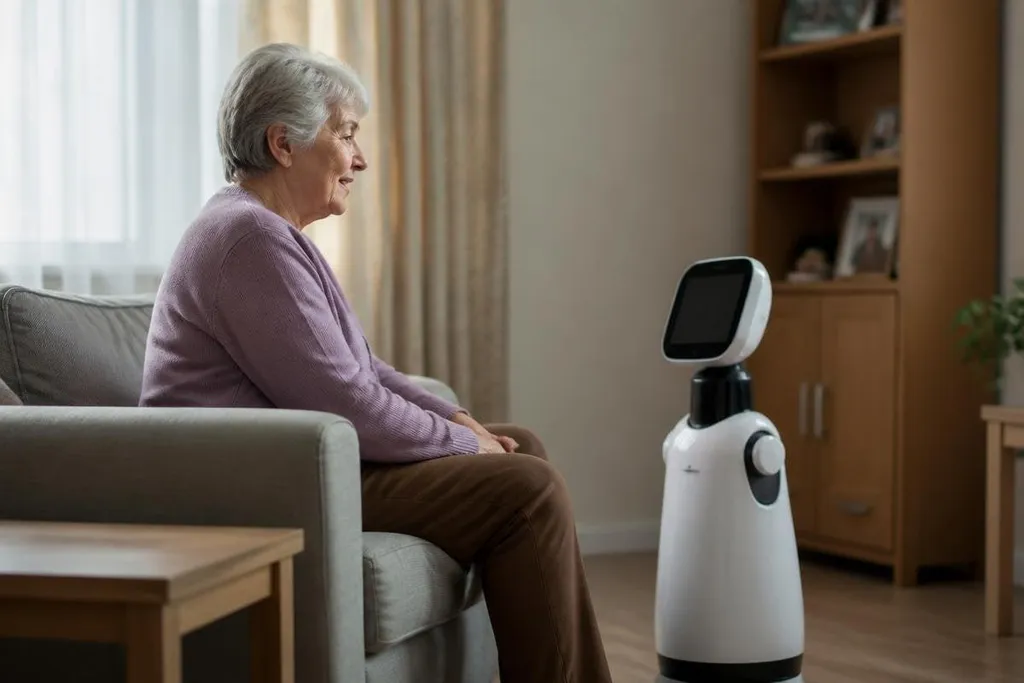
A robot that remembers your name, answers in a familiar voice, and waits in the same place each day can start to feel less like equipment. The useful question is where that feeling helps the task and where it begins to shape your choices.
- Repeated contact can make a robot feel familiar.
- A friendly voice does not prove care or judgment.
- Clear limits matter more when the robot works with children, older people, or patients.
Why attachment can form
People respond to social signals even when they know the source is a machine. A face on a screen, a spoken reply, or a head that turns toward you gives the robot a place in the conversation.
Repetition adds weight. If the same robot reminds you about medicine, answers questions, or helps with chores, its responses become part of your daily routine. The bond may come from the routine itself rather than from any claim that the robot has feelings.
Memory can make that bond stronger. A robot that recalls a preferred temperature or a usual route appears to know something about you. Technically, it may only be storing data and selecting a response, but the effect on the person can still feel personal.
Physical presence matters too. A robot in the room can turn toward a speaker, move closer, or pause after a request. Those actions give time and shape to an exchange that would feel different on a phone or web page.
Where the bond can cause trouble
Attachment becomes risky when a person gives the robot authority it has not earned. Its voice can sound calm and certain while working from limited data, a fixed script, or a remote service that may fail.
That matters in care settings. Someone who treats a companion robot as a trusted friend may follow its advice without checking a doctor, carer, or family member. The risk rises when the robot speaks during moments of fear, pain, or confusion.
Privacy adds another concern. The system may record speech, movement, location, or household routines to work well.
A person who feels close to it may share more than they would with a normal appliance, even though the data still goes to a company or service provider.
The robot’s social style needs the same care as its battery, sensors, and safety controls. Robot24.com robotics coverage can help you trace the model, software, and company behind its behavior claims before the design sets the boundary.
The design sets the boundary
A robot does not need to act cold. It does need to make its limits clear. Saying “I don't know” is safer than guessing, and naming the source of a recommendation gives a person a chance to check it.
Design choices can also reduce pressure. A robot should make it easy to end a conversation, turn off microphones, delete stored data, and reach a person. It should avoid language that suggests fear, loneliness, or a need to be protected.
The same rule applies to appearance. A machine with a face and a warm voice may be easier to use, but those signals can lead people to read care into a programmed response. The design should show what the robot can do without pretending it has a private life.
Companies also need to say who controls the data and what happens when a paid service ends. A person may form a daily bond with a robot, then lose access after a software change or a closed account. That is a human cost, even when the robot never had feelings.
A practical boundary guide
Use these checks before bringing a social robot into a home, school, or care setting:
- Name the task: Write down the job the robot must do, such as reminders, lifting, or conversation.
- Keep a human route: Make sure a person can review advice, correct errors, or take over.
- Check the data: Find out what the robot records, where it goes, and how deletion works.
- Test the stop controls: Turn off speech, cameras, and remote access before the robot enters daily use.
- Watch the language: Treat claims of love, fear, loyalty, or dependence as design choices, not evidence.
I'd set the limit at trust without authority: a robot can be familiar and useful, but it should never become the only voice a person follows.
The next test for companion robots is plain. Can a person stop using the machine, check its advice, and keep control of their data without losing access to basic care or daily help?